Knowledge Intelligence Runtime · v1.0

MONAD Knowledge Intelligence Runtime

Upload your documents. Ask anything. See why the answer was generated.

Sample diagnostic preview
RLI v2
0.842
Confidence
0.94
Agents
7 / 7
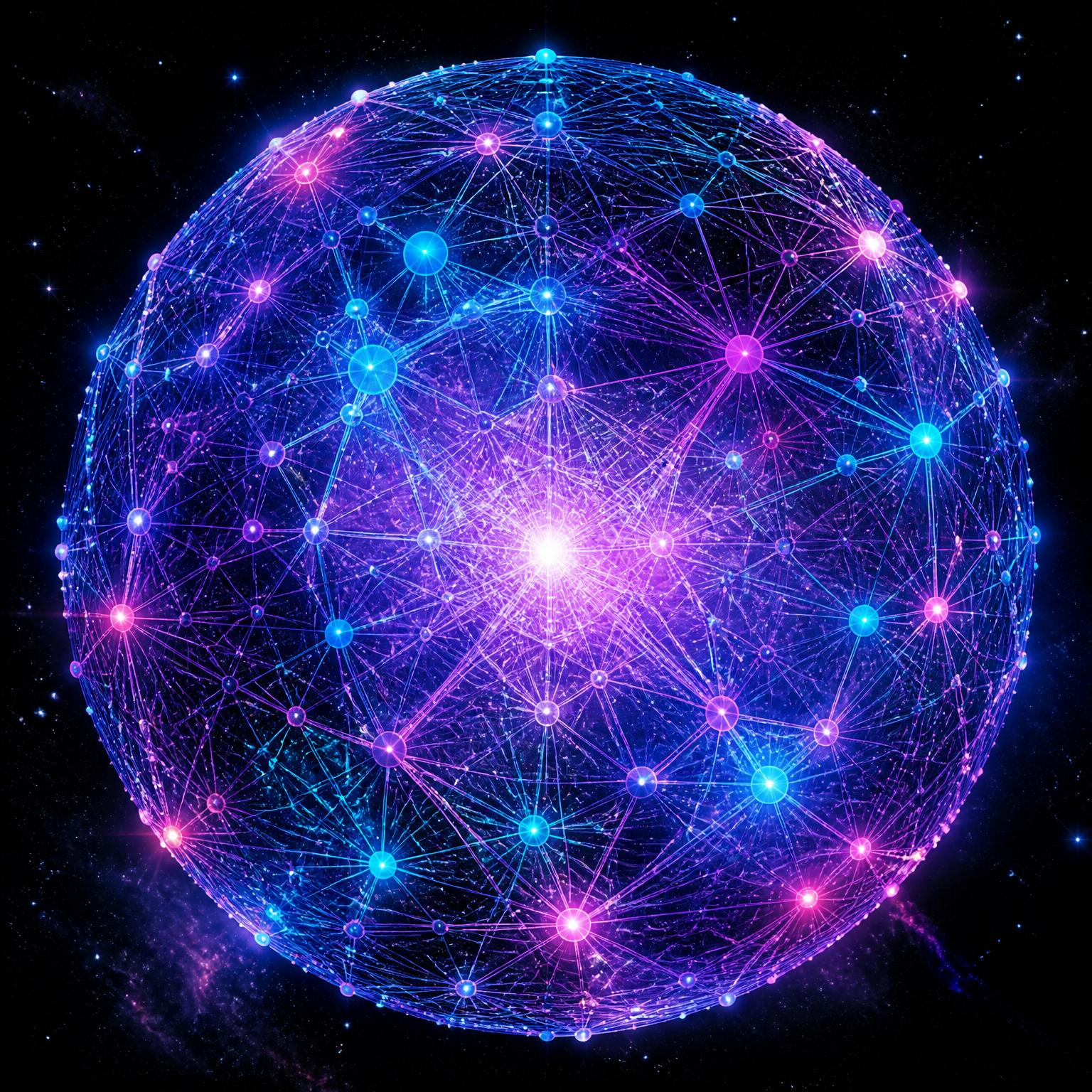
MONAD memory graph — glowing spherical knowledge network
Classic RAG
retrieves information.
MONAD
activates diagnosable knowledge states.
The problem

Knowledge systems give answers, but not reasons.

Classic RAG returns chunks.

Fragments of text without structure, relations or reasoning paths. The model fills the gaps — and so do the errors.

Chatbots hide uncertainty.

Confidence is rarely surfaced. A wrong answer looks the same as a right one, which makes review impossible.

Teams cannot audit answers.

There is no trace of why a response was produced. No retrieval path, no consensus, no diagnosable state.

The solution

MONAD turns documents into diagnosable knowledge states.

Every answer is built from an activated subgraph of your memory — not a bag of chunks. Each step is recorded, scored and inspectable.

Document
Chunk
Embedding
Memory Graph
Semantic Links
Activated Subgraph
Agent Consensus
RLI Diagnostics
Answer + Provenance
Core capabilities

A runtime, not a wrapper.

Eight composable systems form the MONAD knowledge runtime.

Graph Memory

A spherically indexed relational graph holding entities, sections and concepts.

Semantic Linker

Builds typed edges between concepts, sources and abstractions.

Graph Bridge

Cross-community bridges connect distant knowledge clusters.

Agent Consensus

Multiple specialised agents vote and disagree — visibly.

RLI Diagnostics

Reasoning Latent Indicators measure coherence, density and conflict.

Phi-Zero Runtime

Helps reduce unsupported synthesis by gating low-evidence claims.

Source Traceability

Key claims can be traced back to source nodes and documents.

Hallucination Control

Conflict and uncertainty are preserved, not hidden.

Live product preview

See the reasoning, not just the response.

Query Console, reconstructed answer, retrieval path, hybrid confidence, RLI score and agent consensus — together in one inspectable view.

monad.os / dashboard
Sample diagnostic previewv1.0 GA
Query Console
How does Phi-Zero suppress unsupported claims?
Research ModeDeep SearchPhi Zero Gate
Retrieval Path
coherence 0.91
● Query● Expanded● Activated● Synthesis● Answer
Reconstructed Answer
High Confidence

Phi-Zero acts as a final synthesis gate. Claims unsupported by the activated subgraph are pruned before the answer is written, and uncertainty is propagated from RLI diagnostics into the final confidence score.

Sample diagnostic preview
Confidence
0.94
RLI v2
0.89
Sources
12
Agent ConsensusSample diagnostic preview
0.88
  • Document Agent
    0.92
  • Verification Agent
    0.87
  • Conflict Agent
    0.76
  • Synthesis Agent
    0.91
  • RLI Agent
    0.89
  • Router Agent
    0.85
Sources
Sample diagnostic preview
MONAD Whitepaper
§ 4.2 Phi-Zero Gate
0.95
RLI v2 Specification
p. 18 — Coherence
0.92
Agent Resonance Layer
§ 3 Consensus
0.87
Benchmark snapshot

Measured against real knowledge tasks.

Recall@5
0.87
latest internal benchmark
Precision@5
0.82
latest internal benchmark
Answer Correctness
0.91
latest internal benchmark
Hallucination Rate
0.04
latest internal benchmark
Calibration / ECE
0.06
latest internal benchmark
Why MONAD is different

Built to be inspected.

Classic RAG
MONAD
Unit of retrieval
Text chunks
Activated subgraphs
Explainability
Opaque
Retrieval path visible
Confidence
Weakly calibrated
Graph-coherence scored
Uncertainty
Hidden
Preserved & surfaced
Agent reasoning
Single pass
Multi-agent consensus log
Auditability
Hard to inspect
Diagnostic by design
Use cases

Where reasoning needs to be visible.

Pharmacy Knowledge Engine

Ingest formularies, monographs and internal protocols with auditable answers.

Internal Documentation Search

Replace fragmented wikis with a graph that explains every retrieval.

Scientific Literature Analysis

Bridge concepts across papers, find conflicts, trace claims to sources.

Research Intelligence

Run planners and synthesizers over structured corpora at scale.

Technical Documentation

Answers grounded in versioned specs, with provenance per sentence.

Compliance Knowledge Base

Diagnose uncertainty and conflict before publishing an answer.

Trust & safety

Designed for auditable answers.

MONAD is built for environments where being wrong has consequences.

Source visibility

Every claim links back to its document and node.

Uncertainty shown

Confidence and conflict are first-class outputs.

Conflict detection

Disagreements between sources are surfaced, not averaged away.

Diagnostic confidence

RLI v2 measures coherence of the activated subgraph.

No unsupported claims

Phi-Zero suppresses synthesis beyond the evidence.

MONAD is not a medical, legal or clinical decision-maker. It is an auditable knowledge and reasoning layer for expert review.

Request access

Request a MONAD Pilot.

Use MONAD on your internal documents and evaluate retrieval quality, source traceability, confidence, conflict detection and time saved.

MONAD is an explainability and reasoning layer. It does not replace expert judgement in regulated or clinical workflows.

Build a knowledge system you can inspect.

Stop guessing whether the answer is right. Start seeing exactly how it was produced.